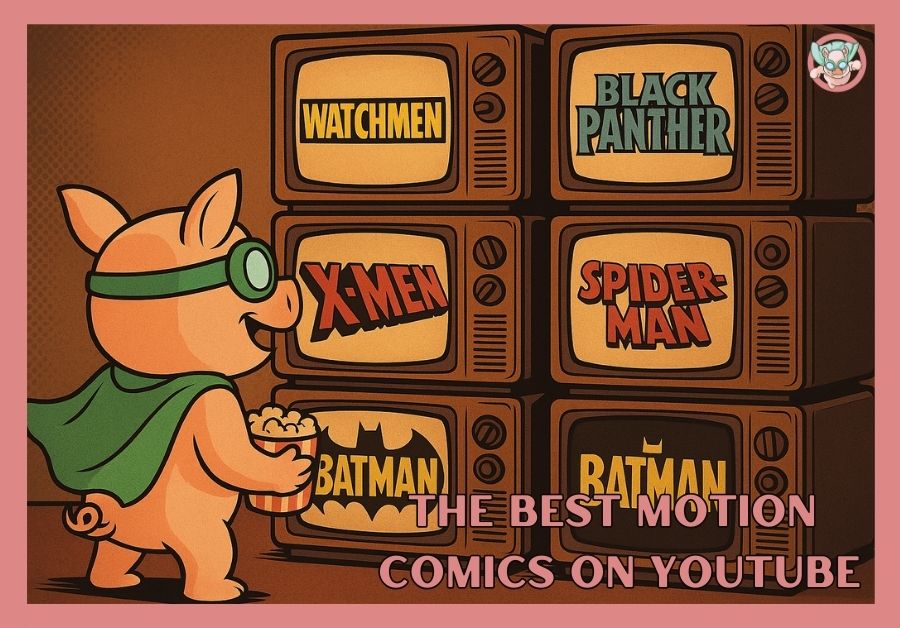
Motion comics are a strange and fascinating hybrid. They sit somewhere between static comics and full-on animation, carrying the panel structure, art style, and dialogue bubbles of the printed page but infused with sound, music, and movement. For fans, they’re a way to see favorite stories leap from the page without losing their comic DNA. For creators, they’re a chance to experiment with pacing and atmosphere in ways that animation budgets don’t always allow.
When they work, they hit hard. When they don’t, you feel the stutter of an in-between medium. We, the Super Pig Bros, dove into the archives of motion comic history and pulled out the ones that matter most—both for what they got right and for what they revealed about the form itself.
Table of Contents
The Birth of Motion Comics
Before streaming giants were cranking out comic adaptations at scale, publishers experimented with digital-first versions of their classics. Limited animation, panel zooms, and voiceovers were stitched into existing comic art. Early efforts were rough—sometimes one narrator voiced every character, sometimes the sound design felt like placeholder stock audio—but the ambition was there: give comics a second life on screen without losing their soul.
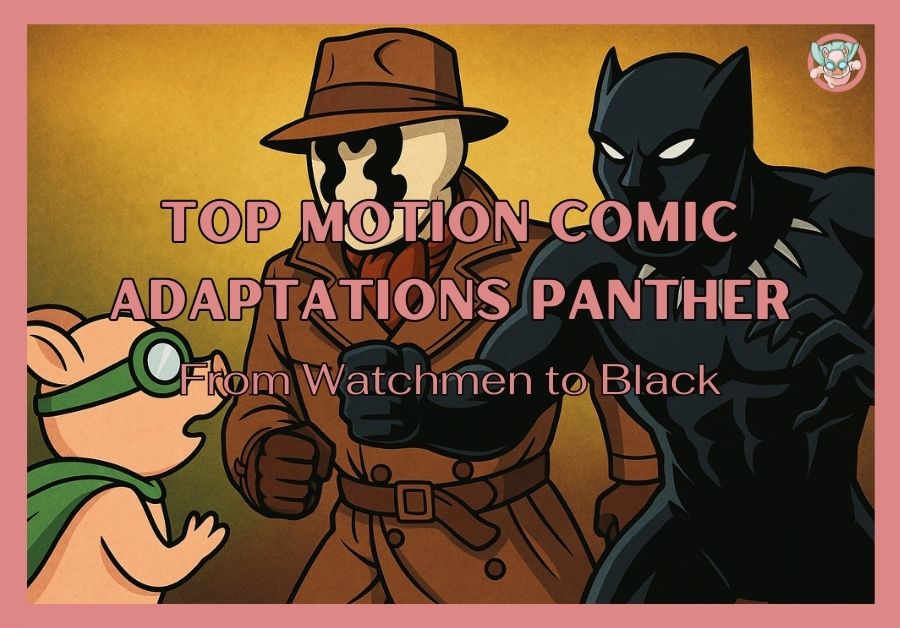
This experimentation set the stage for the motion comics that followed, paving the way for Watchmen and Black Panther to showcase what the medium could really do.
While these are the best adaptations, some of the best motion comics on YouTube can be viewed at that link, regardless of adaptation or not. Continue to the below for the sweet adaptations though! Enjoy!
Case Studies in Motion
Watchmen
Alan Moore and Dave Gibbons’ Watchmen is legendary in print—dense, layered, iconic. Its motion comic counterpart leaned heavily on Gibbons’ original art, slicing panels and layering simple movements over them. The voice acting was divisive: one narrator voiced all the characters, which gave it a strange, theatrical tone. But the haunting music and stark visuals preserved the book’s mood.
Our take: It’s not perfect, but it works. Watchmen was never meant to be smooth—it’s a jagged story full of broken ideals. The motion comic feels awkward in places, and that awkwardness mirrors the world it’s portraying.
Black Panther: Who Is the Black Panther?
Based on Reginald Hudlin and John Romita Jr.’s comic arc, this motion comic introduced Wakanda to audiences years before the MCU would. The art was sharp, the pacing faster than earlier attempts, and the voice cast gave it depth. With African rhythms underscoring battle scenes and bold panel transitions, it captured the pride and spectacle of T’Challa’s world.
Our take: This is one of the most effective motion comics because it leans into its strengths—color, rhythm, and atmosphere. You feel Wakanda’s vibrancy even without big-budget animation.
Iron Man: Extremis
Produced under the Marvel Knights label, this adaptation of Warren Ellis and Adi Granov’s Extremis storyline hit in the mid-2000s. Stark’s transformation and the high-tech visuals translated perfectly to motion. The digital panel zooms amplified Granov’s sleek artwork, and the voice acting sold Stark’s mix of arrogance and humanity.
Our take: Iron Man thrives in motion comics. The tech aesthetic pairs naturally with digital enhancement, making Extremis feel almost more alive than the page.
Thor & Loki: Blood Brothers
Esad Ribić’s art was already cinematic—epic, painted, heavy with mythology. The motion comic accentuated that grandeur, with swelling music and atmospheric pacing. This wasn’t just a comic moving; it was Norse opera in motion.
Our take: If Watchmen feels jagged and Black Panther feels vibrant, Blood Brothers feels majestic. It showed that motion comics could scale up to myth without collapsing under their own weight.
The Astonishing X-Men
Joss Whedon and John Cassaday’s Astonishing X-Men brought back Marvel’s mutants with bold storylines and clean, modern visuals. The motion comic leaned into Cassaday’s art, adding just enough animation to heighten emotion without drowning it. With solid voice work and strong pacing, it stood out as one of Marvel’s most polished motion comics.
Our take: This is where Marvel found its motion comic groove. It’s the one we recommend to anyone skeptical of the format.
What Makes a Motion Comic Great?
After digging into these adaptations, we see a few keys to success:
- Voice acting matters. One narrator for all roles (Watchmen) feels jarring, while ensemble casts (Black Panther, Astonishing X-Men) bring the world alive.
- Sound design carries mood. Music and ambient effects can elevate static panels into emotional beats.
- Respect the art. Motion comics are at their best when they treat the original visuals as sacred, not as raw assets to be over-animated.
- Pacing is everything. Rush the panels and you lose gravity. Linger too long and it drags.
Watchmen vs. Black Panther: A Contrast
- Watchmen is cerebral, jagged, and morally gray. Its motion comic mirrors that unease.
- Black Panther is bold, rhythmic, and culturally charged. Its motion comic pulses with energy.
- Both succeed by leaning into their core: unease for Watchmen, spectacle for Black Panther.
Where Motion Comics Go Next
Streaming services now have the budgets for full animation, so motion comics don’t dominate the way they did a decade ago. But the format still has potential. Fan creators keep experimenting, and publishers eye digital-first releases as cheaper ways to test storylines. Add in the possibilities of VR/AR and interactive panels, and motion comics might be on the verge of another evolution.
The truth? Motion comics will always be niche, but they’re a niche worth exploring. They reveal the DNA of comics in a way movies never can.
Closing Thoughts
Motion comics are at their best when they don’t apologize for what they are. They’re not cartoons, and they’re not static comics. They’re something in between—a medium that can preserve the intimacy of the panel while amplifying it with voice, sound, and movement.
From Watchmen’s jagged grit to Black Panther’s vibrant spectacle, the form has proven it can adapt wildly different tones. For us, these stories remind us why we love comics in the first place—not just for the panels, but for the worlds inside them.
Written by the Super Pig Bros